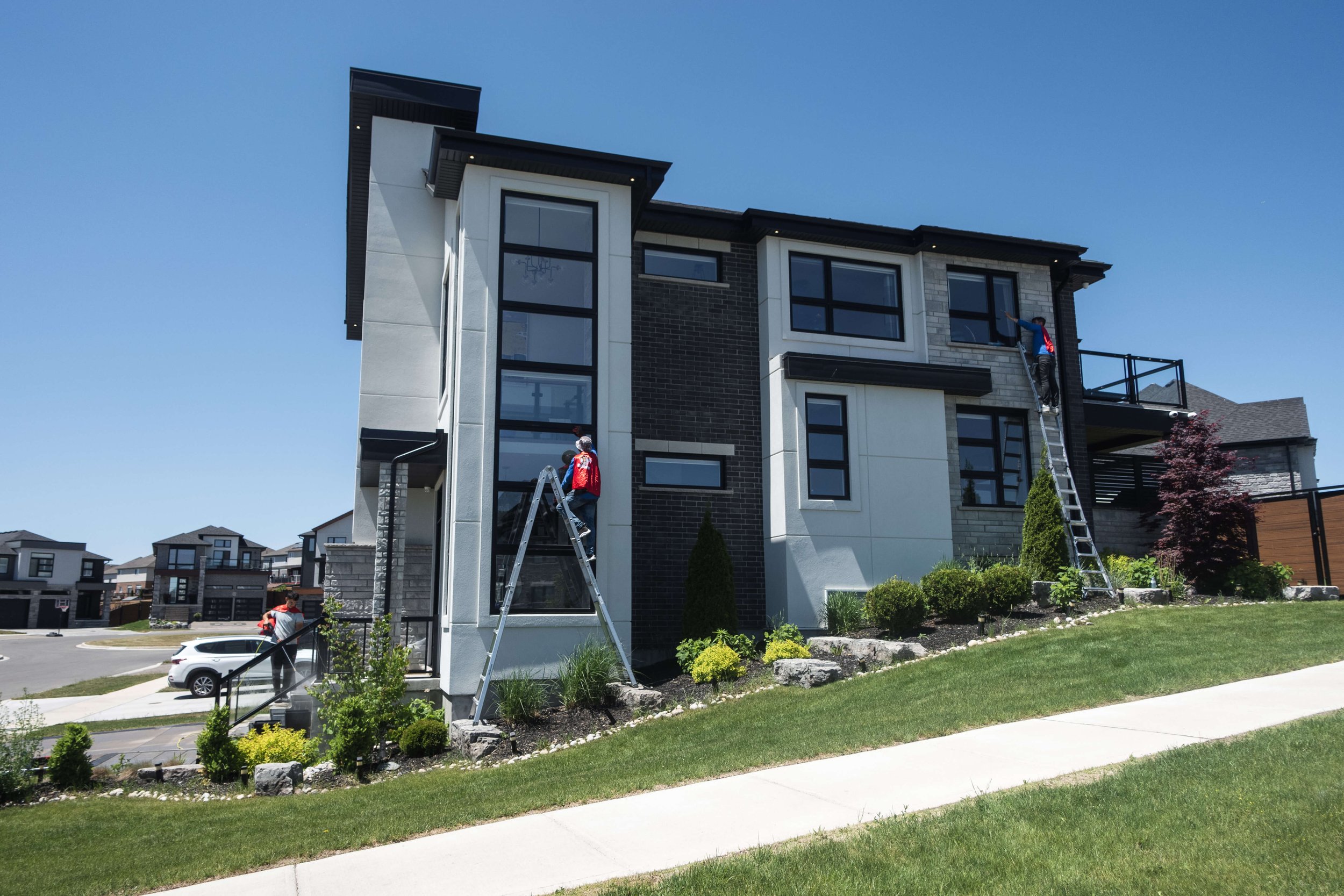
Pressure washing and soft washing are two very different cleaning methods — and using the wrong one on the wrong surface can cause serious damage to your home. If you're a homeowner in Kitchener-Waterloo trying to figure out which approach your property needs, this guide will clear things up so you can make the right call.
Both methods are designed to remove dirt, mould, mildew, algae, and grime from your home's exterior. But the way they accomplish that job — and the surfaces they're safe for — couldn't be more different. Let's break them down.
What Is Pressure Washing?
Pressure washing (also called power washing) uses a high-pressure stream of water to blast away dirt, grime, and buildup from hard surfaces. Most professional pressure washers operate between 1,500 and 4,000 PSI (pounds per square inch), which is powerful enough to strip years of ground-in stains from concrete and stone.
This method relies purely on the force of water to do the cleaning. No chemicals, no special solutions — just raw pressure. It's incredibly effective on surfaces that can handle the intensity, and it delivers fast, visible results that are hard to beat. When you see a before-and-after of a grimy driveway turned bright white, that's pressure washing at work.
Best Surfaces for Pressure Washing
- Concrete driveways and garage floors
- Brick walkways and patios
- Stone retaining walls
- Concrete sidewalks and pool decks
- Unfinished hardscape surfaces
The common thread: these are all hard, durable materials that won't be damaged by high-pressure water. If the surface is dense and solid, pressure washing is almost always the right choice.
What Is Soft Washing?
Soft washing takes a completely different approach. Instead of relying on brute force, soft washing uses low pressure (typically under 500 PSI) combined with specialized, biodegradable cleaning solutions that dissolve organic growth at the source. The cleaning solution does the heavy lifting — killing mould, mildew, algae, and bacteria — while the gentle water stream rinses everything away.
This method is specifically designed for surfaces that would be damaged or destroyed by high-pressure water. The solutions used in soft washing are formulated to break down biological contaminants without harming the material underneath, and they provide a longer-lasting clean because they eliminate growth at the root level rather than just blasting it off the surface.
Best Surfaces for Soft Washing
- Vinyl and aluminum siding
- Stucco and EIFS
- Roof shingles (asphalt, cedar)
- Painted wood surfaces
- Wood fences and decks
- Window surrounds and trim
When to Use Each Method: A Quick Reference
Choosing between pressure washing and soft washing comes down to one question: how durable is the surface? Here's a simple breakdown for common areas around your Kitchener-Waterloo home:
Use Pressure Washing For:
- Driveways and garage pads
- Sidewalks and front walkways
- Patios and back decks (concrete or stone)
- Concrete foundation walls
- Brick and natural stone surfaces
Use Soft Washing For:
- House siding (vinyl, aluminum, wood, stucco)
- Roof shingles and tiles
- Painted surfaces and trim
- Wood fences and pergolas
- Gutters and soffits
- Any surface prone to damage from high pressure
What Happens When You Use the Wrong Method
This is where things get expensive. Using pressure washing on surfaces that require soft washing can cause real, costly damage. Here are the most common mistakes we see in Kitchener-Waterloo:
- Blown-off shingles: Pressure washing a roof will strip granules from asphalt shingles, void your warranty, and can literally blow shingles right off the roof deck. Roof cleaning should always be done with soft washing.
- Stripped paint: High pressure will peel paint right off wood siding, trim, and fences. Repainting an entire exterior is far more expensive than a proper soft wash.
- Water intrusion: Forcing high-pressure water under siding, around window seals, or into stucco joints can drive moisture behind your walls. This leads to mould growth, insulation damage, and rot that you won't discover until it's a major repair.
- Voided warranties: Many siding and roofing manufacturers explicitly state that pressure washing voids their product warranty. If something fails later, you're paying out of pocket.
- Etched concrete: Even concrete can be damaged if the pressure is too high or the nozzle too close. Inexperienced operators can leave visible etch marks and uneven patterns in your driveway.
How Hero Washing Handles It the Right Way
At Hero Washing, we never take a one-size-fits-all approach. Every job starts with an on-site assessment where we evaluate each surface on your property and determine the right method — pressure washing, soft washing, or a combination of both — before any equipment gets turned on.
Our team uses commercial-grade equipment with adjustable pressure settings and professional-grade, biodegradable cleaning solutions. That means your concrete driveway gets the high-pressure treatment it needs, while your vinyl siding and roof get the gentle soft wash that keeps them safe. Same visit, different methods, every surface treated correctly.
We serve homeowners across Kitchener, Waterloo, Cambridge, and Guelph with pressure washing, soft washing, house washing, and roof cleaning. Every job is backed by our satisfaction guarantee and full WSIB insurance coverage.